
Beyond the Ambulance: Why Australia’s "Registered Paramedics" Are Not Just EMTs (or Doctors)

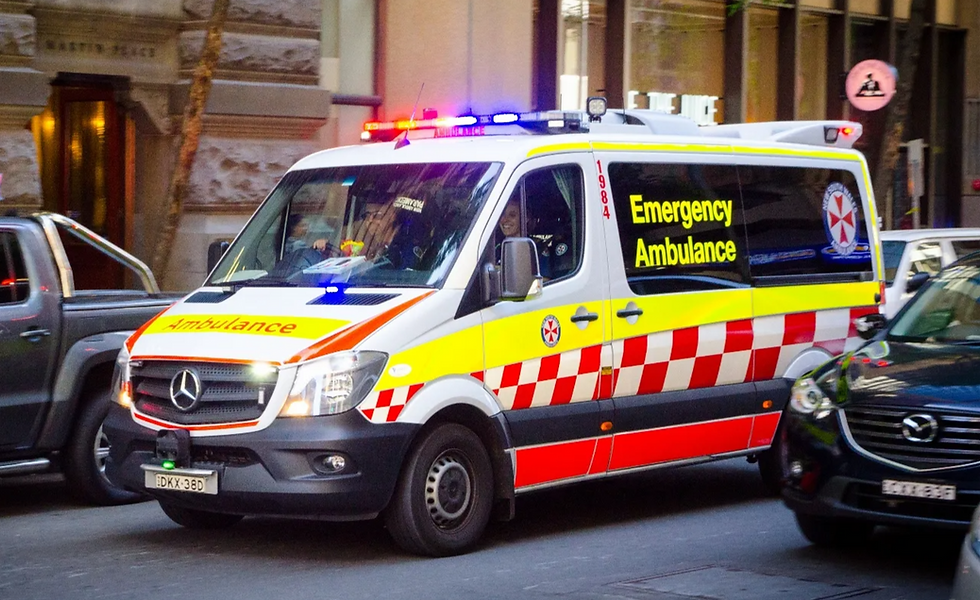
When you see an ambulance speeding past with lights flashing and sirens blaring, it is easy to assume that emergency medical services are the same all over the world. However, if you look beneath the surface, you will find vastly different healthcare frameworks, and in Australia, you must move over to allow the ambulance through.
In some countries, an ambulance is essentially a rapid transport vehicle staffed by technicians with vocational certificates. In others, it acts as an extension of a hospital ward, carrying nurses and physicians.
Australia stands apart from most of the world by treating Paramedicine as a distinct, highly educated, and legally protected profession. This article breaks down how an Australian Registered Paramedic compares to a US Emergency Medical Technician (EMT), a doctor, and the unique hospital-driven transport services found across Asia and Europe.
1. What Exactly is a Registered Paramedic?
The public often confuses paramedics with doctors or uses the terms "EMT" and "paramedic" interchangeably. However, their core functions differ significantly.
The Core Definition: An Australian Registered Paramedic is a highly trained healthcare professional who specializes in providing advanced, autonomous, pre-hospital emergency care. They act as the primary interface between a crisis scene and the hospital system.
The Confusion with Doctors: Both paramedics and doctors perform critical interventions like cardiopulmonary resuscitation (CPR), manual defibrillation, endotracheal intubation and intravenous line placement. However, while a doctor has a massive diagnostic scope focusing on long-term clinical management, surgeries, and definitive hospital treatments, a paramedic’s expertise lies in acute stabilization, field leadership, and high-stakes risk management under extreme pressures.
The Clinical Chain: Paramedics do not replace doctors; they form the vital first link. Their field interventions directly preserve life, ensuring a viable patient arrives at the emergency department for a doctor to treat.
2. Education: Universities vs. Vocational Certificates
The basic training required to step onto an ambulance varies drastically by global jurisdiction.
Australia
To practice in Australia, candidates must earn a unified, university-level Bachelor of Paramedicine (or Bachelor of Paramedical Science). This is a rigid, three-year full-time undergraduate degree that pairs biomedical science with hundreds of mandatory hours of supervised clinical placements. Following university, new graduates must complete a structured, on-the-job graduate internship and probationary years before practicing fully autonomously.
United States
The US operates a decentralized, multi-tiered system. To get on an ambulance, an individual often starts as an EMT-Basic, which requires a vocational certificate program lasting only a few months. To become a US Paramedic, they must complete additional training, which ranges from technical certificates to a two-year Associate Degree.
Hospital-Driven Systems
In many other countries, there is no dedicated university degree for paramedicine. The national emergency ambulance services are staffed by individuals who hold standard university or college degrees in general nursing or medicine. They are hospital-based staff members assigned to transport rather than dedicated field-paramedic specialists.
3. Regulation, Licensing, and the Protected Title
Who watches the watchmen? The answer depends entirely on the border you cross.
Australia
Australia utilizes a nationally unified regulatory environment. "Paramedic" is a legally protected title under the Paramedicine Board of Australia and managed via the Australian Health Practitioner Regulation Agency (AHPRA). If you hold this license, you can practice legally in any state or territory. Maintaining this registration requires strict annual Continuing Professional Development (CPD) hours and recurring criminal history clearances.
United States
The US system is heavily fractured at the state level. While the National Registry of Emergency Medical Technicians (NREMT) provides a baseline certification exam, the actual legal authority to practice is issued by individual state EMS boards. A paramedic licensed in one state cannot automatically practice in a neighbouring state without navigating separate credentialing steps, background checks, and state-specific scopes of practice.
International Transport Services
In physician-led transport models across parts of Europe and Asia, emergency crews hold standard nursing or medical practitioner licenses directly under their respective Ministries of Health. Because they are legally viewed as practicing nurses or doctors out in the field, there is no separate registration board, distinct professional registry, or dedicated CPD framework tailored exclusively to pre-hospital paramedicine.
4. Scope of Practice, Medications, and Field Autonomy
The true dividing line between an Australian Registered Paramedic and global alternatives comes down to clinical autonomy: who do you have to ask before you can save a life?
Staff levels:
Australia: Advanced Life Support
USA: BLS and ALS
Hospital models: Variable Hospital Staff
Autonomy:
Australia: High: Fully autonomous clinician
USA: Moderate: Relies on radio check-ins or pre-set protocols
Hospital models: Low to Moderate: Relies on present or remote doctors
Advanced Interventions:
Australia: Surgical airways, chest decompression, intubation, sedation
USA: Intubation / IV lines (Paramedic level only)
Hospital models: Reserved mostly for physicians on board
Medications:
Australia: Large formulary: Narcotics, sedatives, cardiac drugs
USA: Restricted for EMTs; Expanded for Paramedics
Hospital models: Tied to hospital standing orders
The Power of Australian Autonomy
Australian emergency response is overwhelmingly staffed at the Advanced Life Support (ALS) level. Paramedics operate as independent, autonomous clinicians in the field. They do not need to call a base-hospital physician to get permission to administer restricted, high-risk medications like narcotics (morphine, fentanyl), paralytics, or complex cardiac drugs.
Instead, they possess the professional trust to interpret comprehensive, evidence-based Clinical Practice Guidelines (CPGs) on their own. They even hold the unique legal authority to clinically assess, treat, and discharge patients directly at the scene without transporting them to a hospital if emergency admission is deemed unnecessary, or to transport a patient against their will, restrained or sedated, if necessary, if the patient needs to be seen by a doctor but refuses.
The Tiered US Model
The US divides its workforce. If a Basic Life Support (BLS) ambulance staffed by EMT-Basics arrives at a complex trauma scene, their scope is limited to basic airway adjuncts, splinting, oxygen, and automated external defibrillation (AED). They must explicitly call or wait for an ALS intercept team (Paramedics) or contact a base-hospital physician via radio for medical direction to perform advanced interventions or administer controlled substances.
The Extension of the Ward
In many other systems, the ambulance is essentially treated as a mobile bed belonging to a physical hospital facility. Because field crews are predominantly general nurses, their independent scope focuses on stabilization, basic life support, and rapid transit. If advanced drugs must be pushed or complex clinical triage decisions made, the crew operates under strict hospital standing orders, real-time tele-guidance, or the direct supervision of an accompanying hospital physician.
A Global Shift in Perspective
The differences between these global frameworks illustrate two distinct philosophies of emergency medicine:
The Transport and Extension Model: Seen in many parts of the world, this view treats the ambulance service as a rapid transport tool or an extension of the hospital ward, utilizing general medical staff or vocational technicians to move patients quickly to a fixed medical facility. Australia began moving away from this model around 1980.
The Autonomous Professional Model: Championed by Australia, this view invests heavily in the individual professional. By enforcing a mandatory 3-year university education, implementing a strict national registration board (AHPRA), and granting deep clinical autonomy, Australia turns its ambulances into highly adaptable, mobile Emergency Departments led by independent clinicians.


Comments